Very-Veggie Pasta with Cheese

DSCN0380pretty pasta w vegies sm

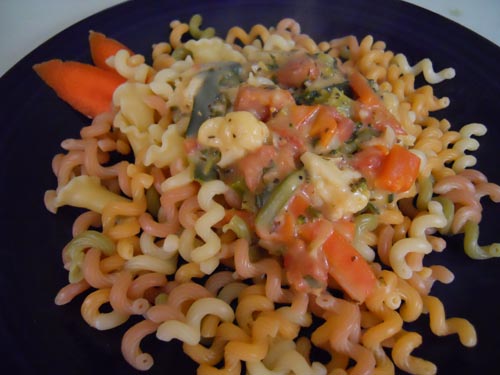
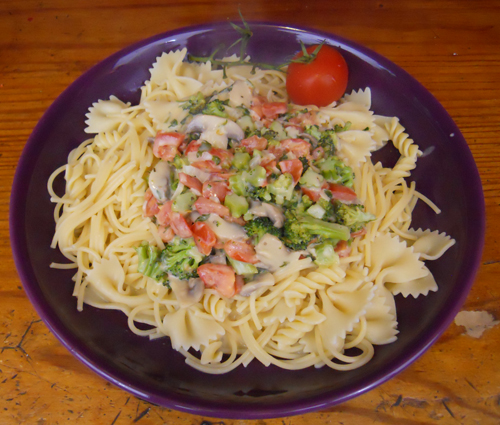
Don’t  buy boxed macaroni and cheese. Instead, make this from scratch in 30 minutes. It’s kid friendly and they get all of their vegetables right in the dish. This is one of the few dishes that all three of my children love, and even their pickiest of friends have asked for seconds.

  • 4 cups chopped vegetables
  • 1/4 onion, finely chopped
  • 4 Tbs. butter
  • 4 Tbs. flour
  • 2 cups milk (you can use soy milk)
  • 3 cups grated cheese (Use what you works for your crowd: – Kids like cheddar or cheddar-jack blend.  – Mix in some Swiss or goat cheese to suit your taste. – Tonight I used Havarti and cheedar.)
  • 1 large, fresh tomato, chopped.
  • about 1 pound of mixed pasta
  • 1 tsp. basil
  • salt and pepper

1. Get your water boiling.

2. Start the sauce:

  • Cut up the vegetables into little pieces. I like to use broccoli and/or zucchini, and mushrooms. I’ve also used thinly sliced kohlrabi, very thinly sliced carrots, cauliflower or chopped spinach. Use your favorites.
  • Saute the vegetables along with the onion in the butter until the vegetable are slightly soft. They’ll cook a bit more after you add in the milk and cheese.
  • Sprinkle the flour over the vegetables and stir it around. It will be a little pasty.
  • Slowly add the milk, a little at a time.
  • Mix in the cheese and let it melt, and add the tomatoes.
  • Season with salt, pepper and basil.

Keep this over the lowest possible heat while you boil the pasta.

  • Pick 2 or 3 different kinds of pasta shapes (bow ties, rotini, etc.). One of them should be a long shape like spaghetti or linguine, which you’re going to break into about 3″ segments before boiling. That way all of the pasta pieces will be of similar size. Boil them all in the same pot of water, taking note of cooking times and adding them one type at a time with the longest-cooking pasta going into the pot first.

Get out your biggest serving bowl, and pour the sauce over the pasta.


I’m thrilled to announce that The Plate is My Canvas is now available as a book, and includes many recipes from this blog.
The Plate is My Canvas: Recipes and Stories from My Family’s Interfaith Kitchen, 222 pages.

I’ve also published two books that are excerpts from “The Plate.”
—For just the Passover recipes, most of which are included in the “The Plate,” Essential Passover from Scratch: Recipes and Stories from My Mother’s Kitchen, 72 pages.
—For the very best of my baked goods—cookies, bread, coffee cakes, etc., You Can’t Have Dry Coffee: Papa’s Excuse to Have a Nosh And Nana’s Perfect Pastries, 86 pages.

These projects started as this food blog! From there emerged the iNosh iPad app (no longer available), and now the books. My goal in making printed copies of The Plate is My Canvas was to pass down my family’s traditions to my children, and I presented them each with the big volume in December of 2018. It’s taken a while, but now the books are available to others.

Homemade Caesar Salad Dressing

The star of tonight’s meal was the salad dressing. I remembered my mother’s Caesar recipe and threw this together in just a couple of minutes. Yes, the salmon was lovely, broiled with just a splash of soy sauce and a squeeze of a lemon; I love the brown basmati rice which is full of flavor and a little gritty; and sweet potato is a treat now that they tell us it’s healthy; but the Caesar dressing was the most exciting flavor on tonight’s plate:

  • 1 cup mayonnaise
  • 1/2 cup Parmesan cheese
  • 1/2 teaspoon Worcestershire sauce
  • 1/2 clove fresh garlic, crushed
  • 1-2″ anchovy paste

Mix it all together, adjust any of the ingredients to taste, and stir in a little milk if you like it thinner.

The art of soup, as learned in the Alaskan wilderness

I learned to make soup in Alaska, the summer after graduating from college. Hired as a waitress at the Mt. Haus Restaurant, I was wearing the tan, polyester peasant top, tucked into my fitted, polyester, brown skirt uniform on the day the cook walked off in the middle of his shift. Kaye, the elderly manager, was frantic in the kitchen, with orders up and no cook for 20 miles. The Mt. Haus sat on the highway between Anchorage and Fairbanks, located 100 miles south of Mt. McKinley. On a clear day we had a terrific view of the mountain. We had no phone. No one there had a car, as most of the staff lived above the restaurant. The other two cooks lived 20 miles away and we had no way to contact them. But after two weeks of watching Lil’ Bit and Jane plate up the orders, I knew the drill. I grabbed the frozen chicken from Kaye, and for the rest of the summer I was the new cook, and I never had to wear the tan or brown polyester again.

Our big draw was the mountain, and tour buses drove up and down the highway all summer. Tourists stopped for lunch and we had a soup and sandwich line all ready. The soup of the day was at the discretion of the cook. Living above a restaurant in the middle of the wilderness with not too much to do but read thick James Michener novels gave me a lot of practice making soups.

I was a decidedly poor soup artist at the beginning of the summer. One of my first creations became my opportunity to sprinkle in whatever spice looked nice. Whole cloves proved to be a mistake. Which I realized in time, and alone in the kitchen, I secretly strained through every bit of soup solids and removed by hand every spec of clove from the pot.

Making soup without a recipe is like making an abstract painting. My palette usually consists of a colorful variety of fresh vegetables, with handfuls of dried legumes, rice or oats, and maybe a dash of meat, used moderately as one would use a condiment. I try and steer clear of frozen vegetables, but will use frozen beans, peas or corn. I rarely, if ever, use bouillon or canned stock — the vegetables and spices will make a perfect stock and you’ll know exactly what you’re eating.

I’m often asked for my recipe for a particular soup, and often I’ll just have to guess what I did. My general plan and advice to soup makers are some of the lessons I learned in the Alaskan kitchen:

  • Take a moment to visualize the soup, imagine the flavor you have a taste for, and then start creating.
  • If there’s a soup you love, ask the chef what spice they used.
  • Look at some recipes to get a starting point.
  • As a general rule of thumb, you can’t go wrong by starting out by sauteing an onion in a little olive oil, adding a chopped carrot and some celery.
  • If you like a tomato flavor then throw in a can of chopped tomatoes.
  • Then start adding from your palette — from the vegetables, legumes, rice, oats, spices and meats in your pantry —  cover with water and let it simmer for several hours.
  • A sweet potato is brilliant in many soups, and you can smash some of the cooked potato against the side of the pot with the back of a spoon to thicken the broth.
  • Look through your spice drawer, open some jars and take a sniff. Imagine if they’ll compliment your ingredients. Try  a pinch and see if you like it.
  • Press in a clove of fresh garlic, and add salt.
  • Sometimes a tablespoon of sugar will bring out the flavor.

My friend Melanie, an artist herself, made an amazing soup last week. She started out with a potato-leek soup in mind, but decided to add some left-over mushrooms, then some beets and fresh grated ginger. Wow! I never would have thought of all of that. She reports that it was amazingly delicious.

Last night I made my very favorite soup, turkey soup. There’s nothing as wild and as inventive as Melanie’s soup, just turkey, carrots, sweet potatoes, celery and parsley, but still rich and delicious. I added matzo balls because it’s Passover.

Seder Salad

For favorite Passover recipes from my kitchen, please see Essential Passover from Scratch: Recipes and Stories from My Mother’s Kitchen

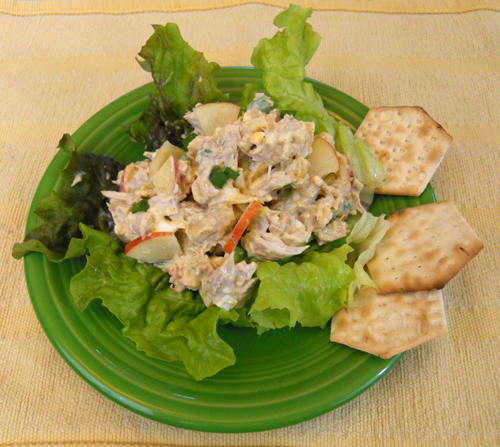
Making a Passover Seder meal generates a lot of disparate left-overs. This curried chicken salad made delicious use of the following:

  • Chicken used to make the matzo ball soup stock.
  • Green onions. My sister introduced a new Seder activity this year whereby we whipped each other with green onions to simulate the slaves being whipped. The kids, as you might imagine, enjoyed this.
  • Lettuce left over from decorating the gefilte fish plates.
  • Apples from the charoset ingredients.
  • Hard boiled eggs. We boiled some extra for a certain appetizer that never quite got assembled. Maybe next year?

I really hadn’t planned what to make for dinner until about 6:15 tonight. I stared in the fridge and the left-overs told me what to do. I know it’s soup night at the Walker Cafe, so we also had some of last night’s left-over asparagus soup — something else made from Seder extras.

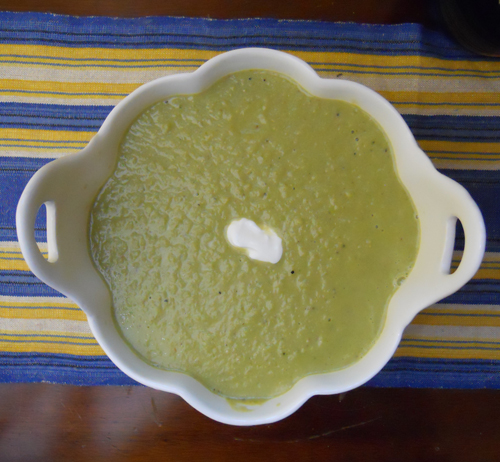
Asparagus Soup

There isn’t much to do with 2-day old wilted, over cooked, cold and slimy asparagus, so I transformed it into an elegant cream of asparagus soup.

Saute up some onions with mushrooms, and after they’re soft put them in the blender along with the asparagus. Thin with some chicken stock and a little white wine if you have it. I made a cream sauce tonight using Matzo Cake Meal instead of flour. Whisk the white sauce into the asparagus puree, heat very gently and serve. Top with a little sour cream if you want to be fancy.

We had this with our Matzo Lasagna.

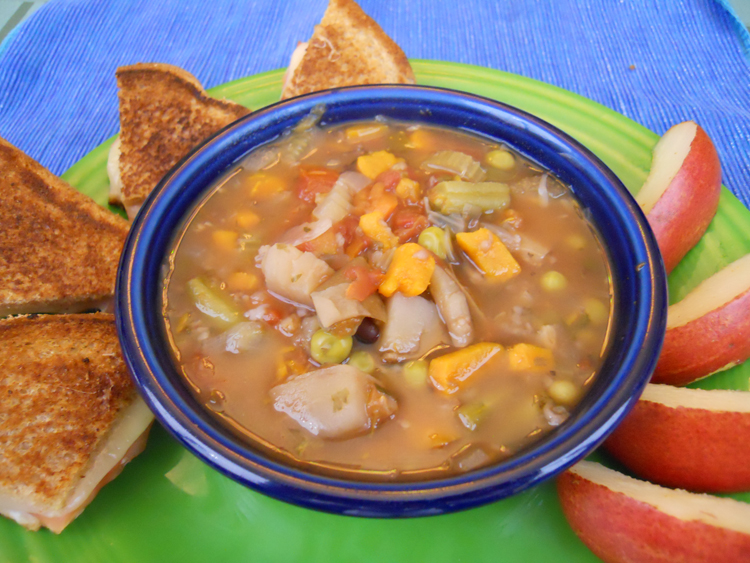
Ruth’s vegetable soup, grilled cheese & tomato triangles, and pear slices

A simple, rainy-day supper. My mom’s vegetable soup is all vegies. Just cut up some onions, carrots, celery and potatoes. Add a couple cans of chopped tomatoes, frozen peas and beans, some chopped parsley if you have it, a handful of rice and a handful of oats (to thicken). I throw in a handful of black beans. Cover it all with some water and let it cook for 3 or 4 hours. Add salt, basil, garlic and pepper.

Polka dotted pasta with ribbons of zucchini and chard

Polka dotted pasta with ribbons of zucchini and chard

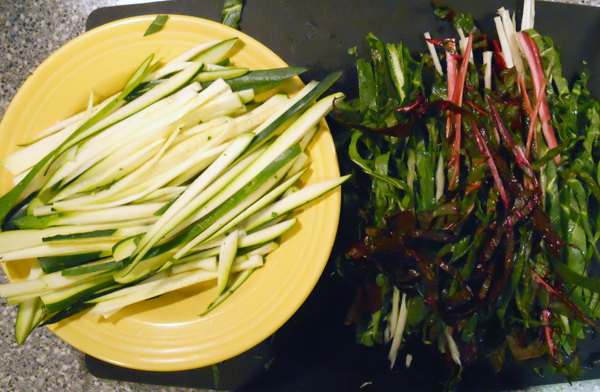
Tonight is pasta night. The trick was to look for something fresh for a vegetable, and today the chard and zucchini looked lovely. Cutting the zucchini and chard into long ribbons makes it easy to fork them up together with the pasta. Even Joe, who doesn’t much care for either of these vegetables, got some mixed in with the noodles and thought that they added a lot of flavor.

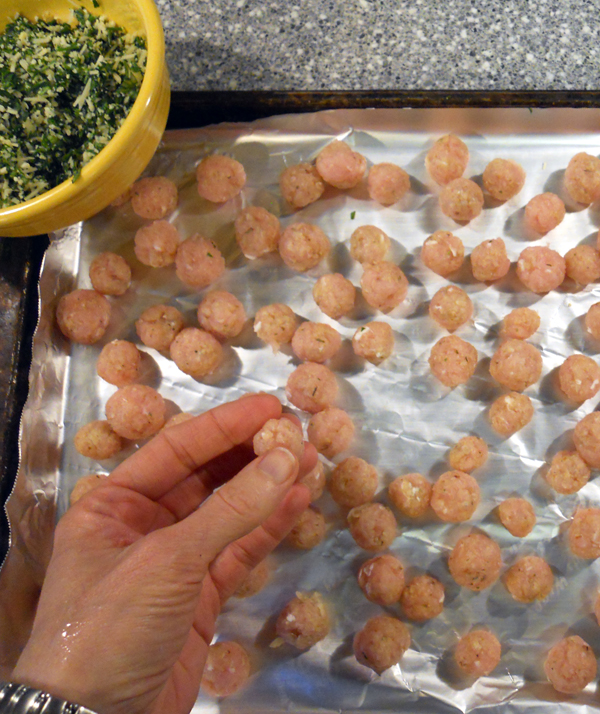
I decided on teeny-tiny meatballs, little polka dots to dot the dish, dredged in fresh parsley and Parmesan cheese. It took some patience, but I was determined to keep them very small, and it only took 15 minutes to make the little marble-sized balls. I used ground turkey, mixed with some garlic, bread crumbs and Italian seasoning. Baking them on some of that non-stick foil (I really like that product), made them really low fat. Just use your favorite marinara sauce to keep things simple.

I thought of this dinner last night while I was going to sleep. I love the contrast in shapes, the variety of color, the nutritional value of the dark green vegetables, and the whimsical name. Every one was happy to give it a try.

Make marble-sized meatballs. Turn on the radio, be patient, and this should only take you 15 minutes. It's well worth the effort. Roll the little balls around in a bowl of finely chopped fresh parsley and Parmesan cheese. They only take about 10 minutes to bake in a 375 degree oven.

Vegie ribbons

Cut the zucchini and chard into skinny ribbons. Saute in olive oil with some fresh garlic, salt and pepper. Do this while the meatballs are in the oven.

What’s for dinner tonight? Tuesday: fish.

“What’s for dinner tonight?” Isn’t that what we all ask each other? My friend Vera taught me her system. Assign a food category to each night of the week. This is the plan at the Walker house:

  • Monday: vegetarian
  • Tuesday: fish
  • Wednesday: pasta
  • Thursday: soup
  • Friday: chicken

On any given Tuesday, I don’t have to think about what “in the world” to have for dinner. It’s simplified into what kind of fish will we have for dinner. Choose your own categories, and remember that every night’s category is subject to change by the chef. A side benefit to this system, if you are consistent with it, and perhaps have it posted in your kitchen (or printed on t-shirts as we have) is that it nearly eliminates complaints from the kids when they see a platter of fish going on the table. They know that it’s fish night.

Joe's shirt

Our family “brand” includes our own kitchen logo, printed on some t-shirts (using our inkjet printer).

All contents and photographs of “The Plate is My Canvas” blog ©2010–2012 Dori Walker, all rights reserved.