The art of soup, as learned in the Alaskan wilderness

I learned to make soup in Alaska, the summer after graduating from college. Hired as a waitress at the Mt. Haus Restaurant, I was wearing the tan, polyester peasant top, tucked into my fitted, polyester, brown skirt uniform on the day the cook walked off in the middle of his shift. Kaye, the elderly manager, was frantic in the kitchen, with orders up and no cook for 20 miles. The Mt. Haus sat on the highway between Anchorage and Fairbanks, located 100 miles south of Mt. McKinley. On a clear day we had a terrific view of the mountain. We had no phone. No one there had a car, as most of the staff lived above the restaurant. The other two cooks lived 20 miles away and we had no way to contact them. But after two weeks of watching Lil’ Bit and Jane plate up the orders, I knew the drill. I grabbed the frozen chicken from Kaye, and for the rest of the summer I was the new cook, and I never had to wear the tan or brown polyester again.

Our big draw was the mountain, and tour buses drove up and down the highway all summer. Tourists stopped for lunch and we had a soup and sandwich line all ready. The soup of the day was at the discretion of the cook. Living above a restaurant in the middle of the wilderness with not too much to do but read thick James Michener novels gave me a lot of practice making soups.

I was a decidedly poor soup artist at the beginning of the summer. One of my first creations became my opportunity to sprinkle in whatever spice looked nice. Whole cloves proved to be a mistake. Which I realized in time, and alone in the kitchen, I secretly strained through every bit of soup solids and removed by hand every spec of clove from the pot.

Making soup without a recipe is like making an abstract painting. My palette usually consists of a colorful variety of fresh vegetables, with handfuls of dried legumes, rice or oats, and maybe a dash of meat, used moderately as one would use a condiment. I try and steer clear of frozen vegetables, but will use frozen beans, peas or corn. I rarely, if ever, use bouillon or canned stock — the vegetables and spices will make a perfect stock and you’ll know exactly what you’re eating.

I’m often asked for my recipe for a particular soup, and often I’ll just have to guess what I did. My general plan and advice to soup makers are some of the lessons I learned in the Alaskan kitchen:

  • Take a moment to visualize the soup, imagine the flavor you have a taste for, and then start creating.
  • If there’s a soup you love, ask the chef what spice they used.
  • Look at some recipes to get a starting point.
  • As a general rule of thumb, you can’t go wrong by starting out by sauteing an onion in a little olive oil, adding a chopped carrot and some celery.
  • If you like a tomato flavor then throw in a can of chopped tomatoes.
  • Then start adding from your palette — from the vegetables, legumes, rice, oats, spices and meats in your pantry —  cover with water and let it simmer for several hours.
  • A sweet potato is brilliant in many soups, and you can smash some of the cooked potato against the side of the pot with the back of a spoon to thicken the broth.
  • Look through your spice drawer, open some jars and take a sniff. Imagine if they’ll compliment your ingredients. Try  a pinch and see if you like it.
  • Press in a clove of fresh garlic, and add salt.
  • Sometimes a tablespoon of sugar will bring out the flavor.

My friend Melanie, an artist herself, made an amazing soup last week. She started out with a potato-leek soup in mind, but decided to add some left-over mushrooms, then some beets and fresh grated ginger. Wow! I never would have thought of all of that. She reports that it was amazingly delicious.

Last night I made my very favorite soup, turkey soup. There’s nothing as wild and as inventive as Melanie’s soup, just turkey, carrots, sweet potatoes, celery and parsley, but still rich and delicious. I added matzo balls because it’s Passover.

Nicole’s Charoset (and the art of making guest cooks feel welcome)

For favorite Passover recipes from my kitchen, please see Essential Passover from Scratch: Recipes and Stories from My Mother’s Kitchen

I became an aunt when I was still a teenager when the idea of someone calling me “Aunt” Dori felt terribly wrong to me. My sister suggested her kids just call me Dori, and so it has been all these years. Now, at 52 years-old I wish I were that lovey-huggy-Auntie, complete with the honorific. And now, thanks to my new niece, Nicole, I am a born-again aunt, Aunt Dori.

Nicole married my nephew Ari in August. They are freshly minted newly weds. Raised in an Orthodox family, a daughter of South African Jews, I imagine that Nicole’s first Passover away from home as a married woman might be a little lonesome. I asked if there was a food that she’d like to have at our Seder, something that she would ordinarily have at her family’s celebration, and she suggested this charoset. Her mother, Jane, sent the “recipe,” which, in true Jewish mother tradition, is nothing more than a list of ingredients: dates, figs, almonds, dried apricots, honey and wine, with sometime the addition of raisins, apples or walnuts. With no set quantities, I went to our local organic food shop and bagged and labeled the various ingredients. Laying the plastic bags with their long, white, coded twist ties on the counter, all in a misshapen jumble, I thought about how inelegant this would be to work with. Nicole was arriving the next day and would assemble the charoset in my kitchen. Embracing my Auntie-ness I emptied the items each into their own mason jar and arranged them in the pantry. I loved the effect so much that I then emptied out  onions and sweet potatoes from their  bags and made a little arrangement in the big red bowl in the butler’s pantry. I loved how inviting the kitchen looked, ready for the women to work together, to share some old traditions as well begin some new ones.

Seder Salad

For favorite Passover recipes from my kitchen, please see Essential Passover from Scratch: Recipes and Stories from My Mother’s Kitchen

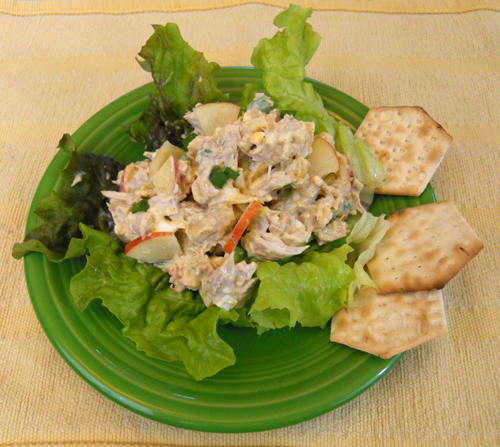
Making a Passover Seder meal generates a lot of disparate left-overs. This curried chicken salad made delicious use of the following:

  • Chicken used to make the matzo ball soup stock.
  • Green onions. My sister introduced a new Seder activity this year whereby we whipped each other with green onions to simulate the slaves being whipped. The kids, as you might imagine, enjoyed this.
  • Lettuce left over from decorating the gefilte fish plates.
  • Apples from the charoset ingredients.
  • Hard boiled eggs. We boiled some extra for a certain appetizer that never quite got assembled. Maybe next year?

I really hadn’t planned what to make for dinner until about 6:15 tonight. I stared in the fridge and the left-overs told me what to do. I know it’s soup night at the Walker Cafe, so we also had some of last night’s left-over asparagus soup — something else made from Seder extras.

“I can’t believe it’s not pasta” Pasta Night: Matzo Lasagna

For favorite Passover recipes from my kitchen, please see Essential Passover from Scratch: Recipes and Stories from My Mother’s Kitchen

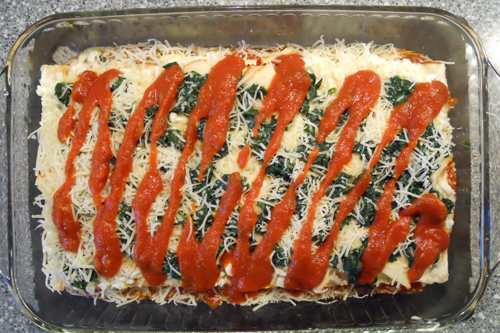
This matzo lasagna is melt-in-your mouth delicious. Prepared essentially the same way as a traditional lasagna, you might not realize that there is matzo in this instead of noodles. It’s very light and holds its shape really well when you cut it.

For this version I mixed a large carton of small curd cottage cheese with three eggs and some Parmesan cheese. I placed a mixture of muenster and mozzarella on top of that blended cheese. Layer it as you would a regular lasagna. For the matzo layers, briefly run the full-sized pieces of matzo under warm tap water before layering. I threw in some wilted fresh spinach on one of the layers. Bake it for about 30 minutes at 350 degrees.

A Big Tzimmes

For favorite Passover recipes from my kitchen, please see Essential Passover from Scratch: Recipes and Stories from My Mother’s Kitchen

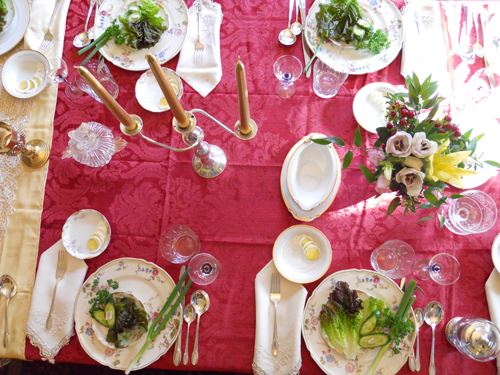
I was raised by the china queen. My mother had more sets of china than I can remember. Many of those now reside inside the two china cabinets in my dining room. I inherited my grandmother’s small mahogany china cabinet, along with the weathered breakfront from my childhood home, which has my name scrawled into the side with a ball point pen (I was four). We now own the floral service for 18 which I only saw every couple of years when my grandmother would unlock her big china cabinet and show me my inheritance; the blue and gold set which my grandmother bought in the 1920’s from a woman whose mother had owned them during the civil war; some Haviland china which I don’t ever remember my mother using because it was just too delicate — the light shines through the cups when you hold them up; and my husband’s grandmother’s white with gold-rimmed Noritake stamped with “Made in occupied Japan,” which she never used and were still in the original box along with the receipt when we inherited them.

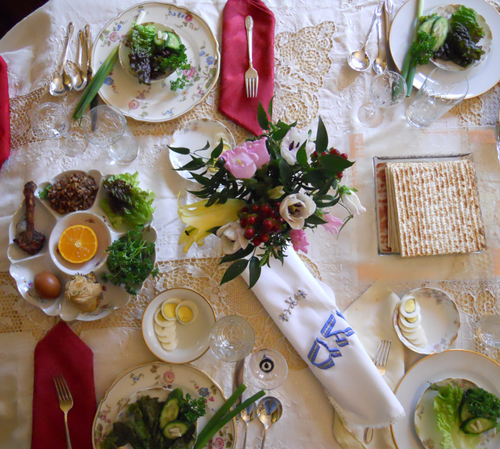
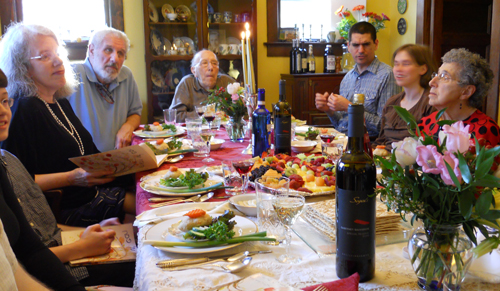
Passover Seder is the night when everything comes out of the china cabinet. The beauty of the ceremony of the Seder meal is matched by the beauty of the table. Our family and friends join us as we read from the Haggadah, with just the right balance of solemnity and fun. We eat the strangest combination of foods which we religiously prepare according to our mother’s recipes — recipes which for the most part have not been written down.

This year’s event was spectacular, but not because of the place-settings. It was spectacular in the process:

— My sister, Maralee, came down a day early so that we could cook together. We made the family’s traditional tzimmes topped with potato kugel. It’s an eye-popping mammoth dish which we make year after year but have come to realize that no one particularly cares for it. It’s a bad habit. We think that my dad likes it and that’s why we made it this year. But we’re considering the possibility that he also finds it bland and is just being polite.

— We made horseradish by blending together pieces of raw horseradish root with apple cider vinegar, sugar, canned beets and a pinch of salt. You know you’re alive when you survive this experience. It makes peeling onions feel like a walk in the park.

— My friend Jennie had exquisite center pieces made and dropped them by the house in the afternoon so we could put them on the table in advance. How thoughtful to think to tell the florist that she wanted to be able to see over the tops of them!

— Our friends down the street walked the pot of kosher chicken soup to our house, and the day before they dropped by the extra cooked chicken in case any of our house-guests wanted some kosher chicken salad.

— My cousin Sheri took over the duty of making the fruit platters which were alive with color of berries and melons, and her husband Mike, the gourmet, made chocolate cake so good that I’ve hidden the two extra pieces in the back of the refrigerator. I’m posting this late so that I can get to the cake before my kids read my blog entry.

— Kate was assigned a matzo farfel kugel, had never made one before, and brought a mushroom kugel so delicious that Max had seconds even though he hates mushrooms.

— Leo drove the Weber grill down from Woodstock and made a smoked turkey out back that made the entire neighborhood smell wonderful.

— My new niece Nicole flew here from San Fransisco with her husband, my old nephew Ari, just to come for Seder. Nicole made a recipe from her family, charoset that we’d never had before with dates, figs, apricots, almonds, honey and wine. I think next year we’ll be adding this to our regular line-up and  scratching tzimmes from the menu.

Our house was spectacularly alive with 22 friends and family. That’s a lot for a table to live up to, and I think we did alright.

Ingberlach

For favorite Passover recipes from my kitchen, please see Essential Passover from Scratch: Recipes and Stories from My Mother’s Kitchen

When I look at this fragile recipe card I can practically smell my grandmother Mollye’s home: honey and Fannie May chocolates, mixed with the subtle aroma of her mahogany furniture. This recipe, like most in her card box, is short on directions. Only because I was her helper during her later years, do I have any sense of what to do. What is omitted here is that she used to go to my grandfather’s bar and take out his bottle of whiskey. Using her hands, she’d pat down the wooden board with some of the alcohol, and would do the same to the top of the burning hot mixture. Nana claimed that the alcohol would act as a coolant. So now when I make the Passover ingberlach I open up that same bar, which I have inherited, and am met with the aroma of mahogany while I look for some of my husband’s whiskey.

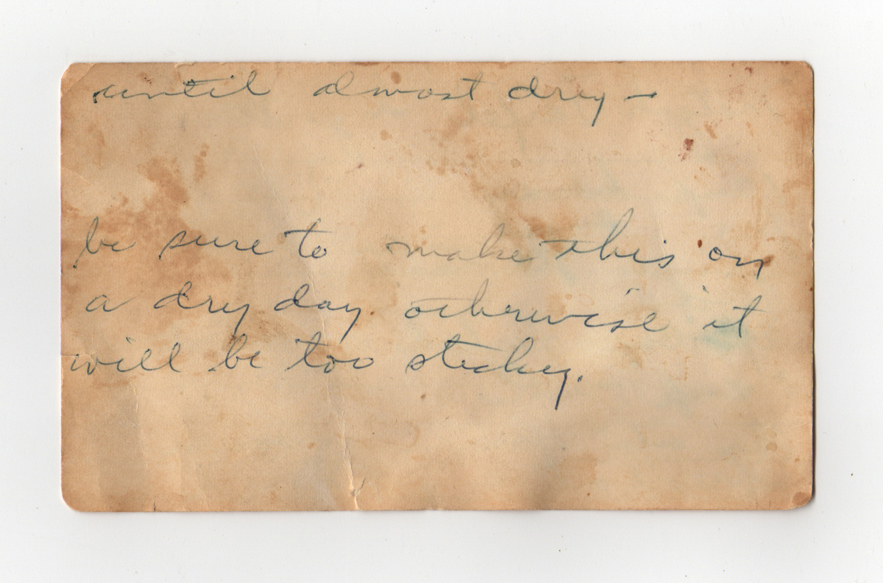
I waited for a dry day, just like Nana noted on the back side of the recipe card:

This is the finished product. You need strong teeth to bite into this candy. After it cools, tear off little pieces and coat them with a mixture of sugar and ginger.

Ingredients

  • 1 c. honey
  • ½ c. sugar
  • 1 tsp. ginger
  • 2 c. matzo farfel
  • 1 c. chopped pecans
  • brandy, 1/8–¼ c.
  • Ginger-sugar
  • 1/3 c. sugar
  • 1½ tsp. ginger (or to taste)

Directions

1. Have ready a large wooden board and the brandy.

2. In a sturdy pot, stir together the honey, sugar and ginger. Bring to a boil, then add the matzo farfel and pecans. Stir constantly, for about 5 minutes, until golden brown.

3. Pour a little brandy into your hand and pat down the board. Then quickly pour out the hot farfel mixture. Spread it evenly to a thickness of about ½”. Pat it down with a little more brandy. (Be careful, as the candy will be extremely hot.) Let cool.

To finish

1. In a small bowl, mix together the ginger and sugar.

2. Tear off little pieces of the candy and coat both sides with ginger-sugar mixture.

3. Store in an airtight container.


Eingie is short for eingemacht.

For favorite Passover recipes from my kitchen, please see Essential Passover from Scratch: Recipes and Stories from My Mother’s Kitchen

With Passover beginning in three days, I continued with my preparations today by visiting several grocery stores, calling my sister every 20 minutes to ask was she bringing the horseradish? kosher wine? cucumbers? and cooking up some eingie. My grandmother, Mollye, made eingie for the entire family every year. She made it for us and also shipped it to California to her son’s family. Later my mother, Ruth, took over the eingie duty, making it ahead and shipping it to her kids. Now I make the eingie.

Eingie is short for eingemacht, which is Yiddish for preserve. In this case it is an apricot-pineapple jam, something like a marmalade in consistency. In our family we spoon it liberally on top of fried matzo and on matzo meal pancakes. Other families eat their Passover breakfast matzo plain, but to me these dishes just don’t taste right without a large spoonful of eingie.

While I was running around town today I found myself close to my mother’s nursing home. She has dementia, and visiting her always makes me sad, so I don’t go to see her very often. Today I felt the need to see her, to make that connection to the women who came before me, to hold her hand and let her know that I am making the eingie this year.

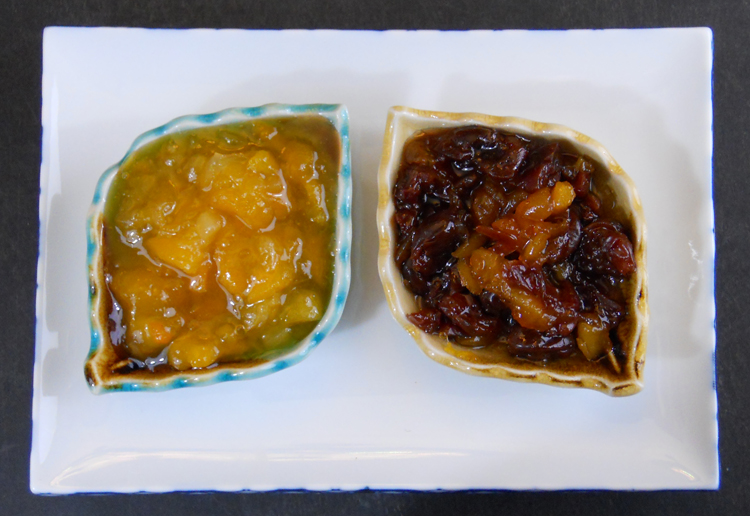
Our traditional eingie is on the left. On the right is a batch made with dried cherries — something new that I think my brother-in-law Leo will especially enjoy.

Ingredients

  • 1¾ lbs. dried apricots, soaked overnight
  • 2 20-ounce cans
    unsweetened crushed
    pineapple, drained
  • 4 c. sugar

Directions

Drain and chop the apricots, then combine all ingredients in a large pot. Cook until very hot and bubbly, and slightly thick. Spoon into hot, sterilized jars and process, or store in covered jars in refrigerator.