Applesauce two ways: cherry & blueberry

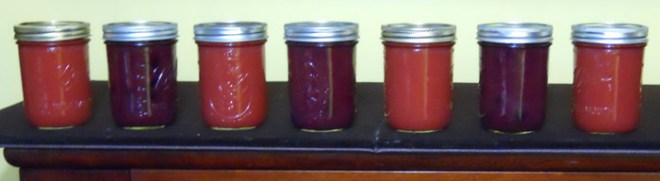
The kids and I went apple picking at the local orchard right before Rosh Hashana. It was a beautiful day and we picked a wagon-full of apples. Tonight I turned them into apple sauce. We picked golden delicious apples—the variety that was ripe that day—which are great eating apples but not particularly tart or full-flavored. A great applesauce would best be made from a tarter apple. My neighbors brought me some homemade sauce yesterday, made from an apple perfectly suited to a sugar-free, stand-on-its own apple sauce. These golden delicious apples, however, all two pecks of them, needed a boost, so I added some sour-cherry juice to some; blueberries to the rest.

When you make your own apple sauce you can taste as you go, adjusting the flavor by adding some sugar, other berries, cinnamon or even some lemon juice. As I tasted, I used the black board in my kitchen to keep track of my adjustments, so that I could jot down the final recipe.

I have a blackboard on my kitchen wall, which I made by painting blackboard paint directly onto the wall. I use it to jot down quantities as I add ingredients so that I can keep track of a new recipe.

Applesauce

Quarter and core the apples, place in a large pot with about 4 inches of water. Cook until the apples are tender, which should only take about 30 minutes or so. Run through a Foley food mill. Discard the peels.

Cherry-applesauce (makes 4-1/2 pints, plus some to taste)

  • 8 c. pressed apples (see above)
  • 2 c. sour cherry juice (freeze the juice next time you pit some cherries)
  • 1/2 c. sugar, to taste
  • 2 Tbs. lemon juice, to taste

Heat to a boil, can into hot, sterilized jars, water process for 20 minutes.

Blueberry-applesauce (makes 4-1/2 pints plus some to taste)

  • 8 c. pressed apples (see above)
  • 3 c. mashed or blended blueberries, fresh or frozen
  • 1/2 c. sugar
  • 2 Tbs. lemon juice

Heat to a boil, can into hot, sterilized jars, water process for 20 minutes.

Is there anything prettier than jars filled with bits of summer?

Performance art: tortellini, cauliflower and a pot too small

Throw the vegetable right in the pot with the pasta. You'll loose a bit of nutrients to the water, but maybe some of them are absorbed by the pasta, right?

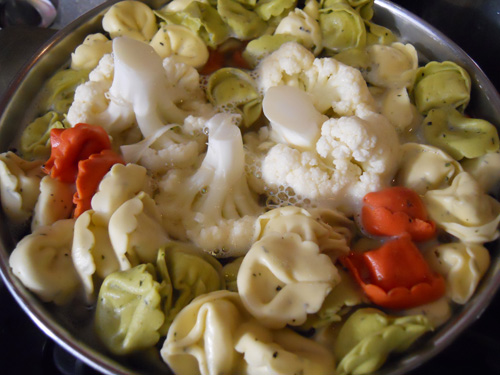
While in the middle of making two kinds of applesauce, in the largest pots I own, I noticed that it was 5:30 and thought, “Shoot, I bet those kids will be expecting some dinner soon.” I grabbed the package of 3-cheese tortellini that I keep for such emergencies, and a head of cauliflower (must have a vegetable with every meal!), and threw them all together into my barely-big-enough pot.

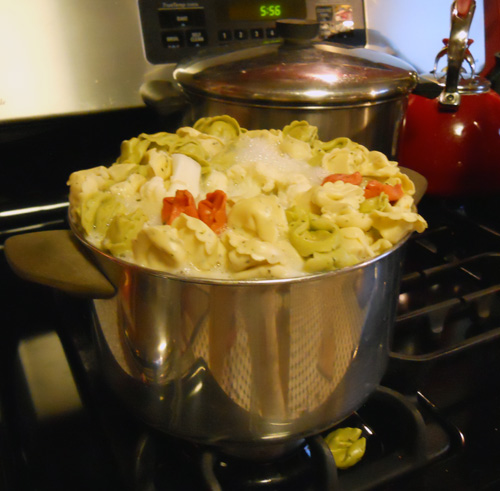
Everything was going swimmingly until the pasta expanded and things started flowing over the rim of the pot.

We ate it anyway.

If you want to enjoy a bit of performance art right before you eat, simply use a pot that's a bit too small to boil the tortellini.

Lunch: a Mélange of leftovers

Try it—you'll like it!

My daughter Molly requested that I write a post about this “recipe,” which is one of our favorite ways to create a bowl of lunch. It calls to mind stories I’ve heard about my husband’s grandfather, Lloyd, who used to take leftovers for lunch, made from the previous night’s dinner foods, all poured together inside a mason jar. Lloyd worked in a bakery and he’d set the big mason jar—heaped full of leftover mashed potatoes, meat, green bean casserole, and whatnot—on top of the bakery oven to warm. Apparently it drove Mrs. Lloyd a little crazy watching all of her lovingly prepared dishes spooned all together into one lump.

Along those lines, today for lunch I took the little bit of left-over mixed vegetables from last night, topped them with a dab of leftover spaghetti from last Wednesday’s pasta night along with the remains of the baked chicken that we had from Yom Kippur. Delicious. This would be at least $12.50 at a fancy restaurant, and they’d have a fancy name for it, too.

Molly’s favorite is leftover rice, mixed with vegetables and just a bit of chopped up meat. We call that one “not-fried rice.”

Make it a fruit PLATTER!

Throw away the plastic containers and make it pretty!

The next time you volunteer to take fruit to the pot luck, please do me a favor and take 5 minutes to plate the fruit with some deliberate care into a tiny work of art.

  1. Pick an unusual-shaped platter. I like this little oval server.
  2. PLACE the fruit onto the platter—do not DUMP it out.
  3. Place each strawberry, one at a time, green side up.
  4. Take a moment to appreciate your masterpiece before it is quickly consumed.

The circle of life: Round Challahs

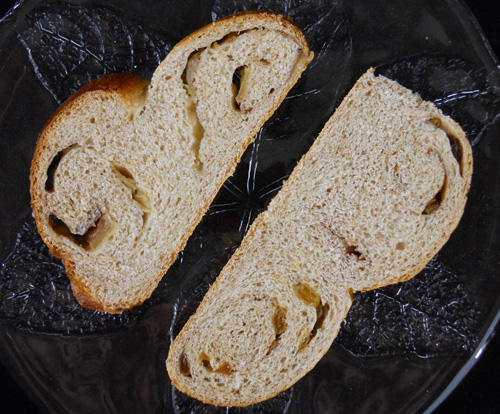
Slices of the round challahs. Apple on the left; raisin on the right.

Last night as I said kaddish for my dad during the Kol Nidre service, I remembered all of the times I sat next to him and my grandfather as they stood in temple to say kaddish for their parents. The melodic cadence of the prayer was effortlessly recited by them both. But in that Reform temple of my childhood only the men said kaddish—a throw-back to more traditional practices. In my current, more traditional yet also more modern congregation, everyone recites the prayer, and I’ve been practicing for the past few years knowing that at any time it might be my turn, and I did not want to disappoint. There was no way to anticipate how emotional that moment would be for me.

My father died three weeks ago. Yesterday, before going to temple, I felt like baking again. And how fitting that the first thing I baked since his death were the holiday challahs, round to symbolize the circle of life and the cycle of the seasons; extra sweet so that we’ll all have a sweet year.

The round challahs are unique to both of the high holidays: Rosh Hashana and Yom Kippur. Our local Jewish Federation has a group that does outreach programs for the seniors in our community. Over the years I’ve been asked to bake dozens of very small, individual, round challahs to contribute to one of their outreach programs. For Chanukah, Purim and the High Holidays they distribute little gift bags to Jewish elderly shut-ins around town, and when my father first moved in with us two years ago, he began receiving these bags. At first I thought it was a silly gesture, after all, my dad had the real thing, right here in our home! He didn’t need the little hamentaschen, or the tiny challahs—mine were baked for him fresh! But to my surprise he loved the bags. He happily showed the contents to me when I got home from work, and he took great pleasure in having little candies of his own that he could share with my children. For Rosh Hashana he would receive a small bottle of grape juice, applesauce, honey, a small round challah, some chocolates, some raisins and a one-page summary of the holiday which he would read carefully with his magnifying glass. What a lovely mitzvah (good deed) this is!

Ten days ago, right before Rosh Hashana I was surprised by a gift bag which was brought to me by Lee, the former director of our local Jewish federation. She brought me a giant version of the bag that they make for the seniors, with enough of everything to feed all five of us, including a full-sized challah, made fresh that morning by Lee herself. She said that she felt funny bringing a challah to the challah baker, but my heart was not in baking that week, and her gift couldn’t have been more appropriate. I was so moved by that gift.

For the raisin bread, drizzle on some honey, sprinkle on raisins and cinammon.

Arrange a thin layer of apples for the apple bread. Or grate an apple and wring out the juice before spreading over the dough.
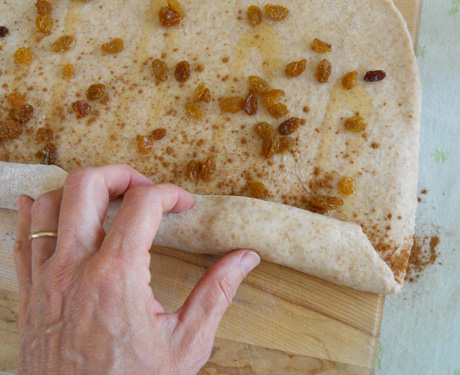
Roll it up. Use both hands and work evenly across the length.
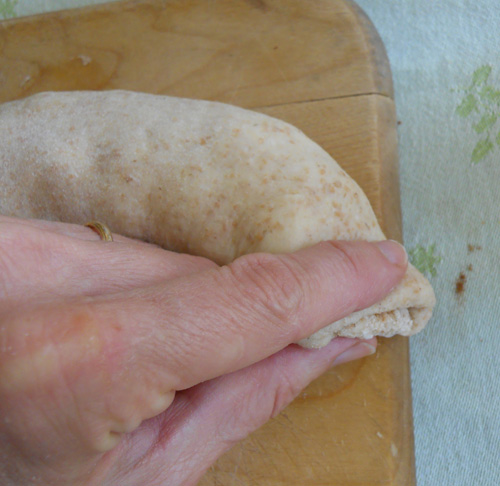
Pinch the ends.

Make the coil. Place it seam side down, and tuck under the end.

Here the coils are ready to rise. They can sit together like this on the same baking sheet. It’s okay if they kiss a little when they bake!

Here are the just-baked breads. It’s okay if they come together while baking. Just gently pull them apart.

Here’s Macey in his favorite chair, hoping for a hot plate on the dinner table and a taste of some hot, fresh challah.


Ingredients

For the dough:

  • 1 package yeast (2¼ tsp.)
  • 2/3 c. sugar
  • 2 c. warm water
  • 1 egg
  • 3 Tbs. oil
  • 1 Tbs. salt
  • 2 c. whole wheat flour
  • 4 c. (about) white flour

Mix together and brush on before baking:

  • 1 egg
  • 1 Tbs. honey

Sprinkle with:

  • sunflower, poppy and/or sesame seeds, about ¼  cup total


Directions

  1. Proof the yeast: Mix together the yeast and sugar, add the warm water, stir, and let it sit for 20 minutes. It should get foamy.
  2. Add the rest of the dough ingredients, putting in just enough white flour to make a smooth, not sticky dough.
    Knead for about 10 minutes.
  3. Cover and let rise for about 3 hours, or until doubled in size. Shape into two small loaves or one large loaf. Place loaves on a greased cookie sheet or into greased loaf pans if you want sandwich-shaped loaves. Cover and let rise for one more hour.
  4. Brush with the egg/honey mixture and sprinkle with some seeds. Bake at 350˚ for 35–40 minutes. (Add 5–10 more minutes for a challah that’s stuffed and rolled, covering with foil for the last 15 minutes to prevent the top from burning.)


You can find more tasty bakes in my newly released cookbooks:

You Can’t Have Dry Coffee: Papa’s Excuse to Have a Nosh And Nana’s Perfect Pastries

Dry Coffee promo

“You can’t have dry coffee,” was what my grandfather would say when reaching for one of my grandmother’s delicious cookies or pastries. Elegant rugelach and mandel bread, tart plum cake, delicate cream cheese cookies, and sweet babka—these fancy treats started me on my life-long love of baking. Along with those classics, this collection has challahs, bagels, bialys, plus modern-day luscious treats like chocolate cream cheese brownies, and the best chewy, peanut butter chocolate cookies I’ve ever had.Whether my grandfather was being ironic, or if something was lost in translation from Yiddish, I’ll never know. But ironic or not, a cup of coffee needs a good nosh, and this book is a compilation of our family’s best.

The Plate is My Canvas: Recipes and Stories from My Family’s Interfaith Kitchen

Plate promo shot

Written in the style of a family memoir, with stories from my family, this book includes all of the Jewish classics, from rugelach to latkes. Married to a Lutheran man, I learned to cook my husband’s family’s classics as well—with help from my mother-in-law’s handwritten recipes. Stunning photographs accompany each recipe. A perfect gift for an interfaith family.

image

Potted Lamb with Red Wine, Garlic and Mushrooms

This is the last of the box of lamb I bought several months ago. The shoulder blade chops wouldn’t be tender if merely grilled, so I did what my grandmother would do, throwing them in a pan, adding some liquid for flavor and let them cook in the juice.

Potted Lamb with Red Wine, Garlic and Mushrooms

  • 3 Tbs. olive oil
  • 2 lamb shoulder blade chops
  • 8 large cloves garlic, sliced
  • 1/4 lemon
  • 1/2 cup dry red wine
  • 1/4 lb. mushrooms, halved
  • seasoned salt

Liberally season the lamb with seasoned salt. In a large, deep pan that has a lid, heat the olive oil until very hot and then add the chops and garlic. After you have browned both sides of the lamb—about 6 minutes per side—squeeze on the lemon juice, pour on the wine, and immediately cover the pan. Reduce to medium and let cook for 10-15 more minutes.

We had enough left over that I will trim it up and make a lamb stew on Friday.

Zucchini Part 3: Zephyr Zucchini

Buy the tiniest zucchini you can find. Serve them whole, on a bed of onions and mushrooms.

I had to look up the name of this type of zucchini. It is my favorite because of its delicate flavor and bicolor cuteness. I couldn’t bear the thought of cutting into these tiny squash, so tonight I cooked them whole, steaming them in the pan over a pan of vidalia onions and mushroom halves.

Saute mushroom halves, a clove of pressed garlic, and onion slices in a little olive oil and butter. When the onions just begin to soften, and the mushrooms have released some juice, place the zephyrs on top, season with salt and pepper, cover and let cook over a low heat for 10-15 minutes. Check them along the way by poking with a knife to see if the squash are cooked. You don’t want to over-cook these. They are best when just tender.

Maralee’s Cold Sesame Noodles

My sister Maralee came to visit the other day. She brought me some new earrings from Israel, a bag of chocolate bars and a full container of Cold Sesame Noodles. I’ve been eating the noodles for lunch all week. That’s what I call a nice sister.

Here is Maralee’s recipe, a new idea for a cold, summer pasta dish:

Sesame Noodles

Cook and let cool 1 to 1-1/2 pounds rotini or other pasta.

Mix together the following, and let sit for a few hours (if you have time):

  • 1/4 c. grated ginger root
  • 1 Tbs. sugar
  • 2 Tbs. toasted sesame oil

Mix together the following until smooth:

  • 5 Tbs. toasted sesame oil
  • 5 rounded Tbs. smooth, unsalted peanut butter (if you use salted peanut butter then reduce amount of soy sauce, below)

Add the following to the first two mixtures:

  • 1/4 c. soy sauce
  • 2 Tbs. apple cider vinegar
  • 2 Tbs. suagr
  • 1 large clove garlic, pressed
  • 1 bunch green onions, chopped

Add a little water to thin, if needed. Toss the sauce with the cooled noodles.

Candace’s Oven-Crisp, Sugary, Peppered Bacon (from her Grandmother)

There's no stove-top clean up when the bacon is baked.

It’s a lovely moment when you’re cooking something ordinary and are reminded of the wonderful friend who first taught you the recipe. This secret bacon recipe, so beautifully simple, was shared with me by Candace McMahan, nearly 20 years ago, at her home in northern Colorado. I haven’t seen Candace in years, but I think about her even more often than I cook bacon.

Baked Bacon

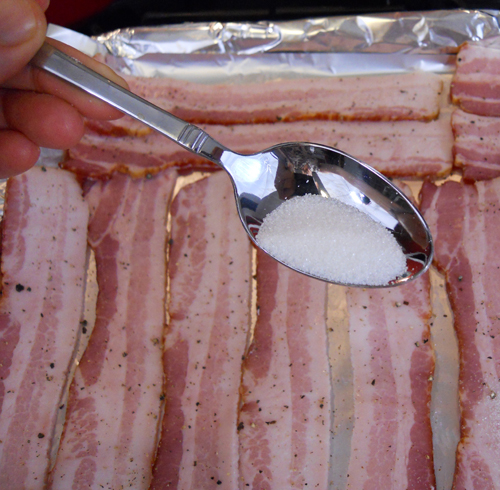
Place the slices of bacon on a cookie sheet that is lined with foil. Sprinkle with coarse pepper and some sugar. Bake at 450 degrees. After about 15 minutes take the pan out of the oven, turn over the slices and sprinkle again with pepper and sugar. Return the pan to the oven, checking it every 5 minutes or so. It will take about another 15 minutes of cooking time, or about 30 minutes from start to finish.

To clean up, after the grease has solidified, gather up the foil and throw away the mess.

It's the pepper and sugar that make this bacon taste so delicious.

A BLT with a garden-fresh tomato makes an easy supper. We ate ours tonight along with some watermelon, potato salad and carrot sticks.

Lemony Rice Pudding

I was planning on gyoza with rice for dinner tonight, but just after I started the pot of rice I noticed the left-over zucchini pancake batter so I changed the menu. Just like that I was left with two cups of cooked rice. The solution, of course, to freshly cooked leftover rice is rice pudding. But I wanted something more refreshing than the usual rice pudding, so I grated in the zest from one whole lemon, added some golden raisins and WOW, it’s really, really good. If you want to impress some fancy company, serve it warm with some freshly whipped cream.

Lemony Rice Pudding

  • 2 c. cooked brown rice
  • 1/2 c. sugar
  • 2 lightly beaten eggs
  • 2 c. milk
  • zest from 1 large lemon
  • 1/3 c. golden raisins
  1. Grease a 1-1/2 quart baking dish.
  2. Put the milk in a medium saucepan, add the raisins, and scald the milk (heat until it just barely begins to bubble at the edges).
  3. Stir the sugar and eggs into the cooked rice.
  4. Slowly stir in the warm milk mixture.
  5. Pour it all into the baking dish. Bake at 350 degrees for 1 hour and 15 minutes, or until the blade of a knife comes out clean when cut through the center of the pudding.

Serve warm or cold, with milk, cream or whipped cream.